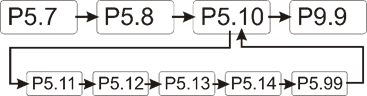
This section supplements the “LIS-SV”
product manual. The parameters described here are only available if the LIS-SV
is used in an ABULiner control unit.
Overview of the
'ABULiner' parameter level
The following parameters can be set in the 'ABULiner'
parameter level of the LIS-SV.
|

|
Danger during setting work!
During setting work on the LIS-SV, monitoring of
the wire rope hoist is switched off. This means the wire rope hoist cannot
be monitored for excess load, among other things. This means the
wire rope hoist cannot be monitored for excess load, among other
things.
This in turn means the load could fall and kill or
injure people!
Do not use the crane for normal work during
setting work, and only lift loads very carefully for test
purposes! |
All LIS-SV parameters which are important for the ABULiner
are combined in a separate parameter level, which is shown as a submenu.
 Move the load hook out of
the limit switch range (up or down).
Move the load hook out of
the limit switch range (up or down).
During parameter setting, the load hook must not be within the
limit switch range.
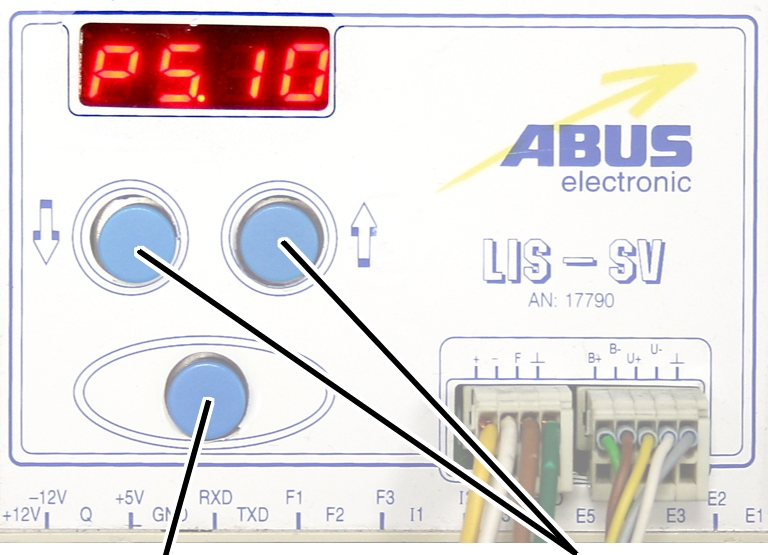
Open the menu of the
LIS-SV. See the documentation “Load indicator system LIS-SV”.
|
|
|
Enter
button |
Arrow
buttons |
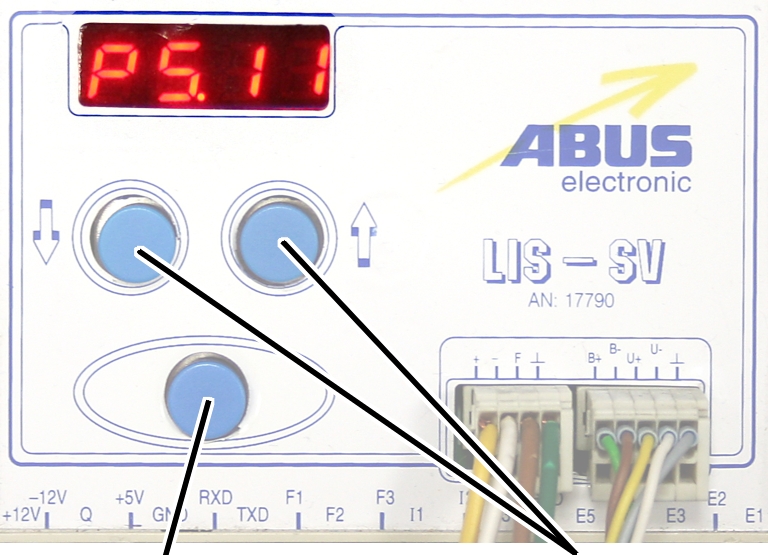
 Select parameter 5.10.
Press ENTER.
● The
'ABULiner' parameter level is activated.
● Parameter
5.11 is displayed.
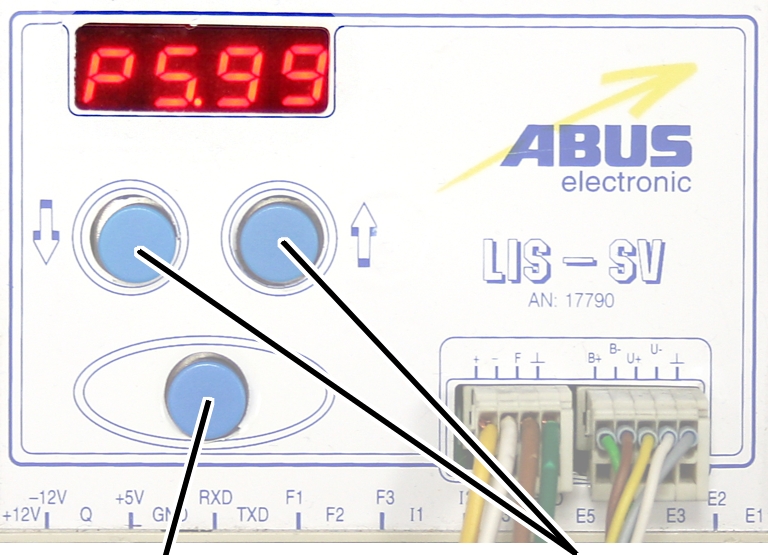
Exiting the
'ABULiner' parameter level
|
|
|
Enter
button |
Arrow
buttons |
Select parameter 5.99.
Press ENTER.
● The
previous parameter level is reactivated.
● Parameter
5.10 is displayed.
The LIS-SV is automatically activated for the ABULiner if a
value is entered for the parameter 5.11.
In the ABULiner mode (a value is set for parameter 5.11):
─ The
LIS-SV can monitor the total load for a maximum of two wire rope hoists.
─ Input F3
(normally used for measuring the load of wire rope hoist 3) now serves in
monitoring the current rotational frequency of the hoist motor.
─ A value
can be entered for parameter 3.0 (maximum load capacity of wire rope hoist 3).
If a value is entered for this, parameter 5.11 cannot be set.
─ This
interlocking thus excludes an incorrect setting.
─ The
load-controlled switching point at output TxD of the LIS-SV cannot be used.
─
Parameter 4.5 (setting for load-controlled switching point) is not available.
In the normal mode (no value is set for parameter 5.11):
─
Operation of the ABULiner Lifting/Lowering unit is not possible.
─ The
LIS-SV can monitor the total load for up to three wire rope hoists.
─ Input F3
serves in measuring the load of a third wire rope hoist.
─ A value
can be entered for parameter 5.11 (gear ratio). If a value is entered for this,
parameter 3.0 cannot be set.
─ This
interlocking thus excludes an incorrect setting.
─ The
load-controlled switching point at output TxD of the LIS-SV can be used.
─
Parameter 4.5 (setting for load-controlled switching point) can be used.
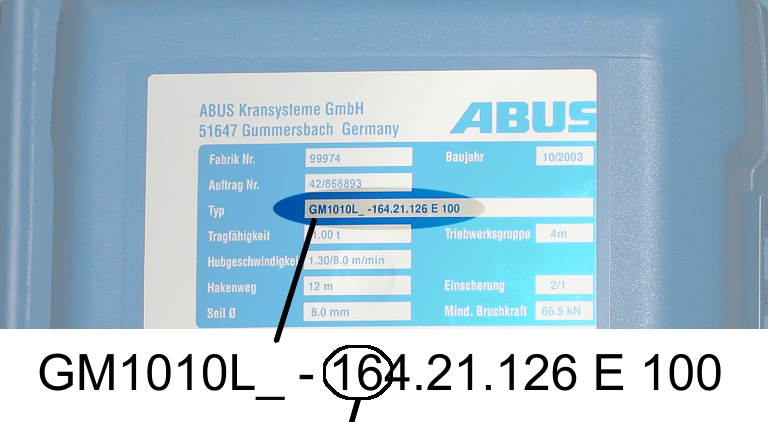
The LIS-SV uses the signal of the encoder and the gear ratio
of the hoisting gear to calculate the hook travel distance, the maximum distance
in the limit switch range and the current rotational frequency of the hoist
motor. The gear ratio must be set on the machine.
|
|
|
Cable
speed |
|
Read off the type
designation at the type plate of the wire rope hoist.
Read off the cable
speed.
From this table, select
the gear ratio that matches the cable speed.
|
|
Cable
speed |
|
Hoist motor GM |
32 m/min at 50 Hz
38 m/min at 60
Hz |
25 m/min at 50 Hz
30 m/min at 60
Hz |
20 m/min at 50 Hz
24 m/min at 60
Hz |
16 m/min at 50 Hz
19 m/min at 60
Hz |
|
800.4 |
50.01 |
63.49 |
77.77 |
98.16 |
|
800.5 |
47.03 |
60.04 |
74.66 |
95.03 |
|
1000.6 |
54.43 |
68.91 |
84.00 |
105.1 |
|
1000.7 |
54.60 |
68.06 |
81.45 |
104.6 |
|
2000.3 |
58.22 |
74.23 |
91.19 |
118.4 |
|
3000.4 |
73.61 |
93.92 |
118.4 |
152.9 |
|
5000.3 |
85.14 |
109.3 |
132.8 |
169.0 |
|
5000.4 |
80.20 |
104.9 |
127.7 |
160.6 |
|
6000.3 |
94.69 |
118.5 |
149.6 |
182.7 |
|
7000.1 |
118.0 |
148.3 |
182.6 |
232.0 |
|
|
|
|
|
|
Table: Gear ratios (numerical values) depending on
hoist motor (lines) and cable speeds (columns) at 50 and 60 Hz.
|
|
|
Enter
button |
Arrow
buttons |
Move the load hook out of
the limit switch range (up or down).
During parameter setting, the load hook must not be within the
limit switch range.
Select parameter 5.11.
Press ENTER.
● The set
value is displayed.
If the value is 0.00, the function is deactivated.
● Hold ENTER
pressed.
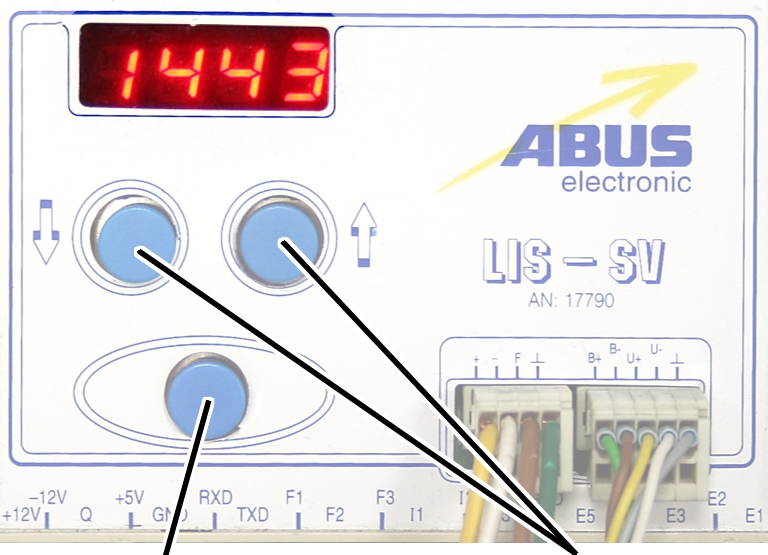
● CODE is
displayed.
Hold ENTER pressed.
|
|
|
Enter
button |
Arrow
buttons |
Enter the code 1443.
Press ENTER briefly.
|
|
|
Enter
button |
Arrow
buttons |
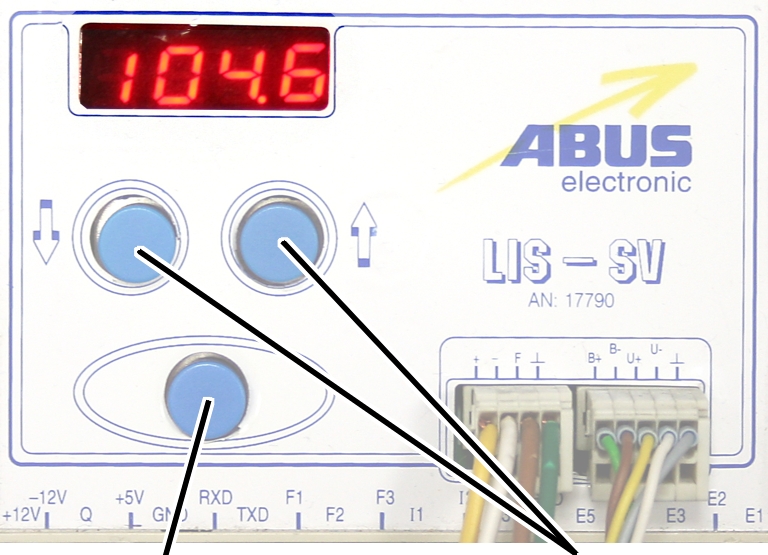
Set the value from the
table.
If the display ‘0.00’ cannot be changed, a value is set in
parameter 3.0. In this case, set the value to zero first.
Press ENTER briefly.
Phoneroticacom Descargar Videos - De Mujeres Teniendo Work Portable
Audiences often use fictional couples as templates to evaluate their own relationships, learning what behaviors to emulate or avoid. Sub-Genres Transforming the Landscape
The definition of "romantic drama and entertainment" has shifted dramatically over the last century.
This public link is valid for 7 days and shares a thread, including any personal information you added. This link or copies made by others cannot be deleted. If you share with third parties, their policies apply. Can’t copy the link right now. Try again later.
Romantic dramas rely on recognizable tropes while evolving to meet modern audience needs. Why K-drama Is Not Just an Entertainment Media phoneroticacom descargar videos de mujeres teniendo work
The medium through which we consume romantic entertainment has shifted dramatically, yet the core emotional triggers remain unchanged. Cinema and Premium Television
Romantic drama and entertainment have captivated audiences for centuries, offering a unique blend of emotional intensity, relatable characters, and complex relationships. From classic literature to modern film and television, the romantic drama genre continues to evolve, influencing popular culture and inspiring new works. Whether you're a fan of romantic comedies, tragic romances, or historical dramas, there's no denying the enduring appeal of romantic drama and entertainment.
Adding elements of suspense, crime, or sci-fi creates a high-octane viewing experience. When characters must dodge literal danger while navigating their feelings, the pacing accelerates, appealing to viewers who might find standard dramas too slow. The Future of Romantic Entertainment Audiences often use fictional couples as templates to
Before television, romantic drama thrived in theatre and literature. Shakespeare’s Romeo and Juliet established the archetypal "star-crossed lovers" trope. In the 19th century, authors like Jane Austen and Charlotte Brontë introduced sharp social commentary into romantic narratives, proving that love stories could serve as critiques of class and gender constraints. The Golden Age of Cinema and Soap Operas
As we look ahead, the intersection of romantic drama and entertainment is shifting toward interactive and hyper-personalized formats. Interactive Romance Apps
: Si deseas ver contenido de Phonerotica.com, lo más sensato es consumirlo directamente en la web , mediante streaming, evitando cualquier intento de descarga no oficial. Si la descarga es imprescindible para ti (por ejemplo, porque viajas sin conexión a Internet), opta por plataformas que ofrezcan explícitamente esta funcionalidad dentro de sus términos de servicio. Recuerda siempre que la seguridad de tu dispositivo y la legalidad de tus acciones deben primar sobre la conveniencia de tener un video guardado localmente. This link or copies made by others cannot be deleted
Lingering glances and near-misses keep viewers hooked.
Miscommunications and missed opportunities create a narrative rhythm that keeps audiences actively rooting for a resolution.
Entertainment thrives on tension. The romantic drama maximizes this by delaying gratification. Every missed connection, lingering glance, and misunderstood conversation sparks a neurological reward system in the brain, keeping audiences hooked through hours of content. From Shakespeare to Streaming: The Evolution of the Genre
Only for auxiliary fans
The auxiliary fan of the hoist motor continues to run for
several minutes after the lifting or lowering. This ensures that the hoist motor
is adequately cooled even at slow lifting speeds. The run-on time can be
adjusted.
|
|
|
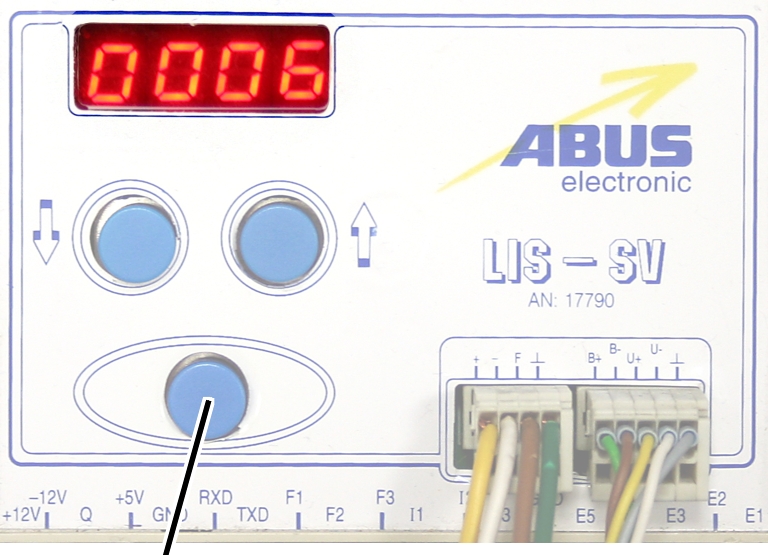
Enter
button |
Arrow
buttons |
Move the load hook out of
the limit switch range (up or down).
During parameter setting, the load hook must not be within the
limit switch range.
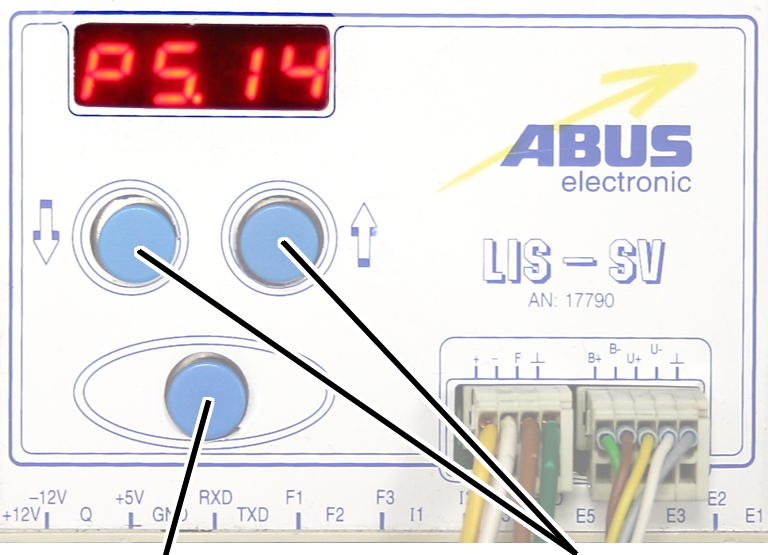
Select parameter 5.14.
Press ENTER.
● The set
value is displayed.
|
|
|
Enter
button |
|
Set the value to between 3
and 10 minutes using the arrow buttons.
Press ENTER.